Specs
Full hardware specs and a detailed breakdown of every module type.
Box specs
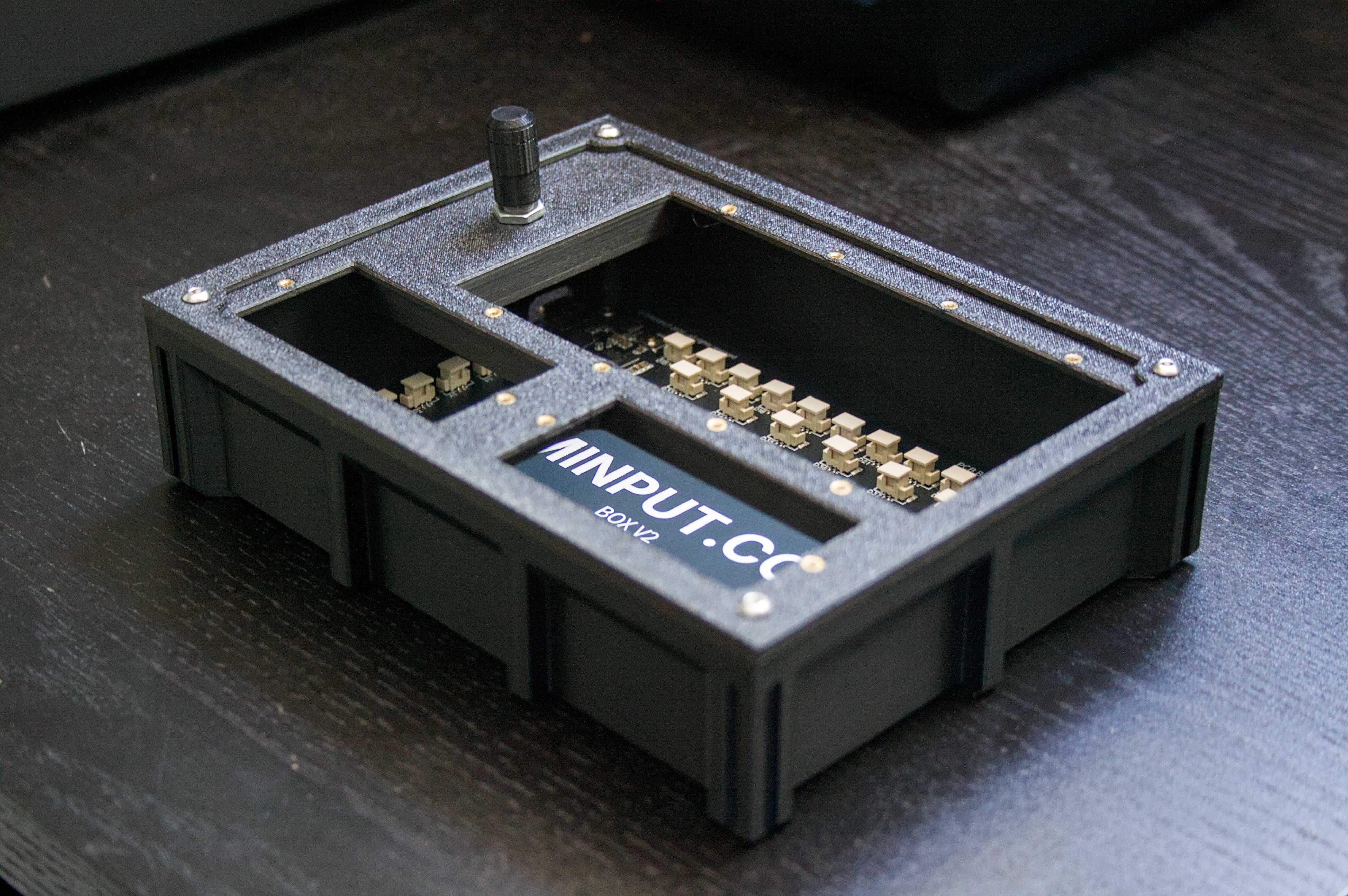
Enclosure
Electronics
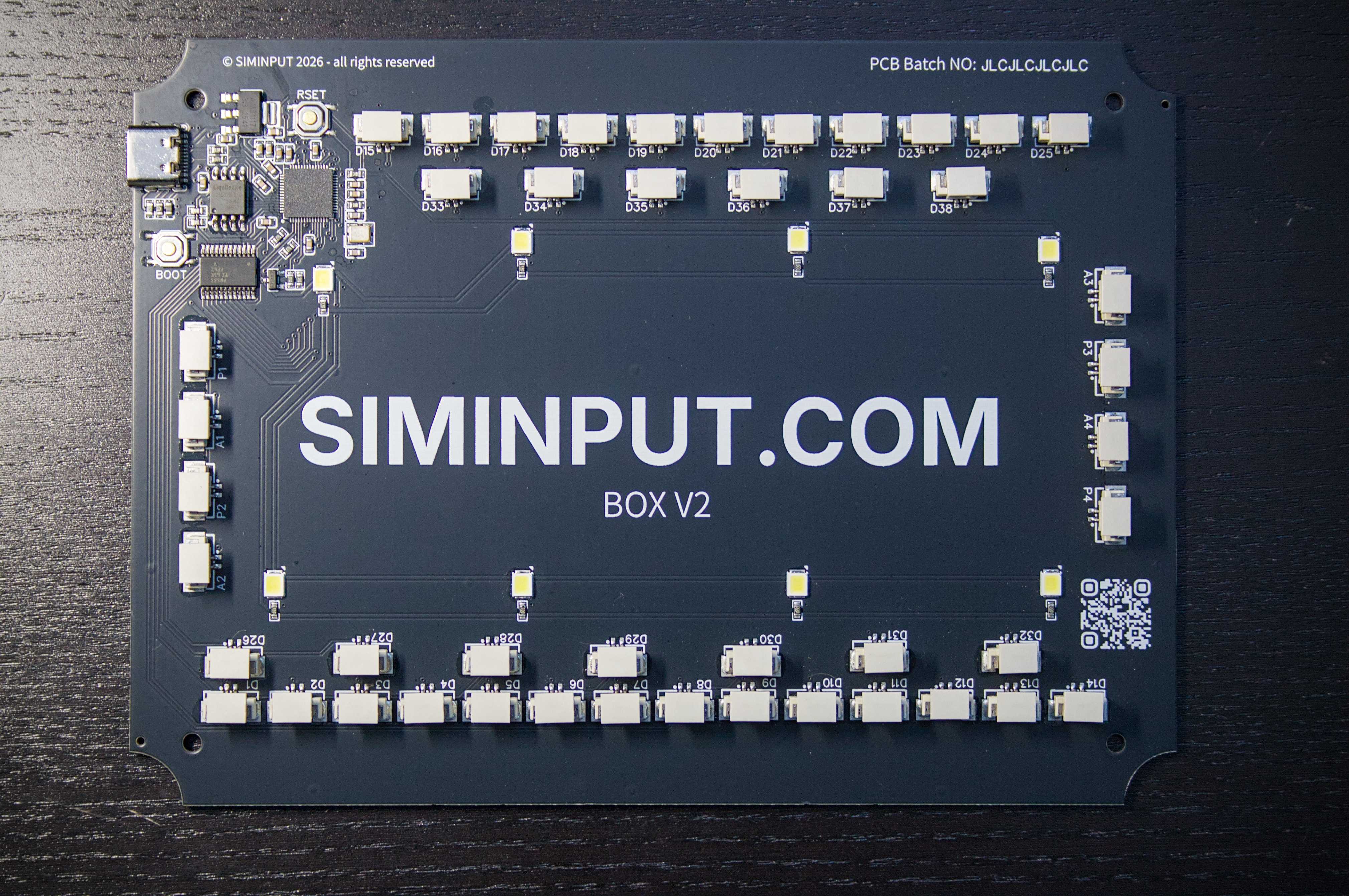
Mounting options
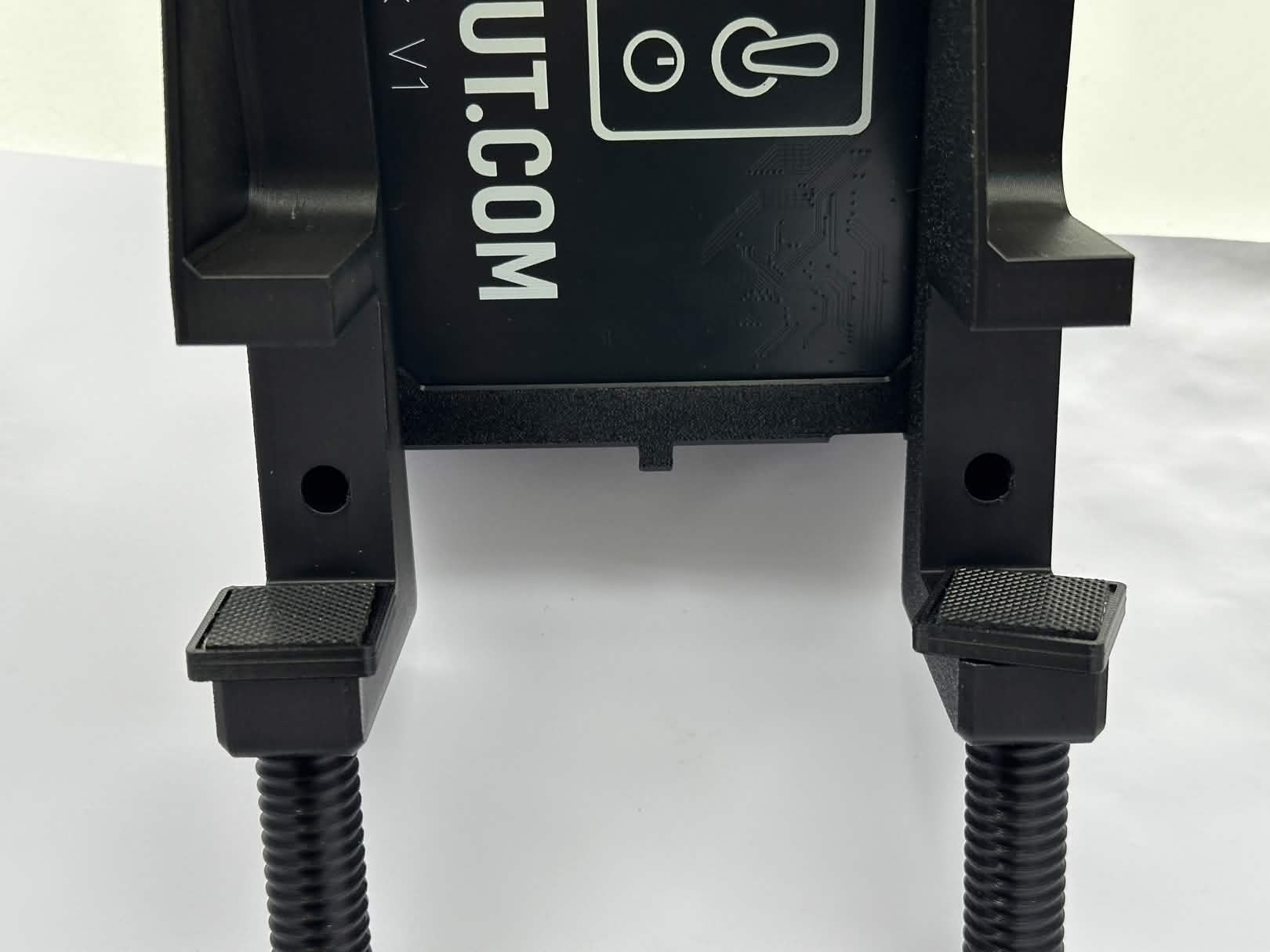
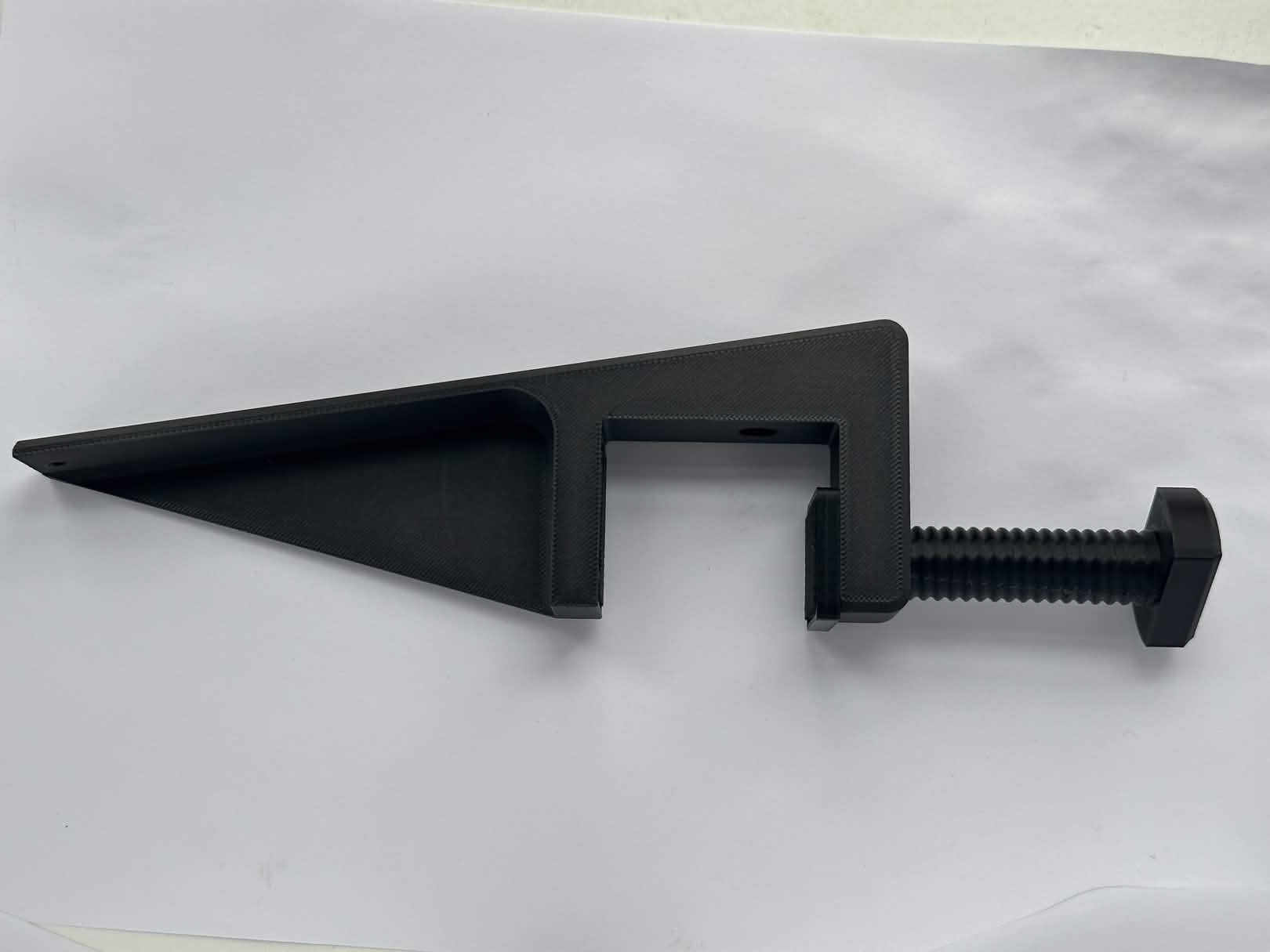
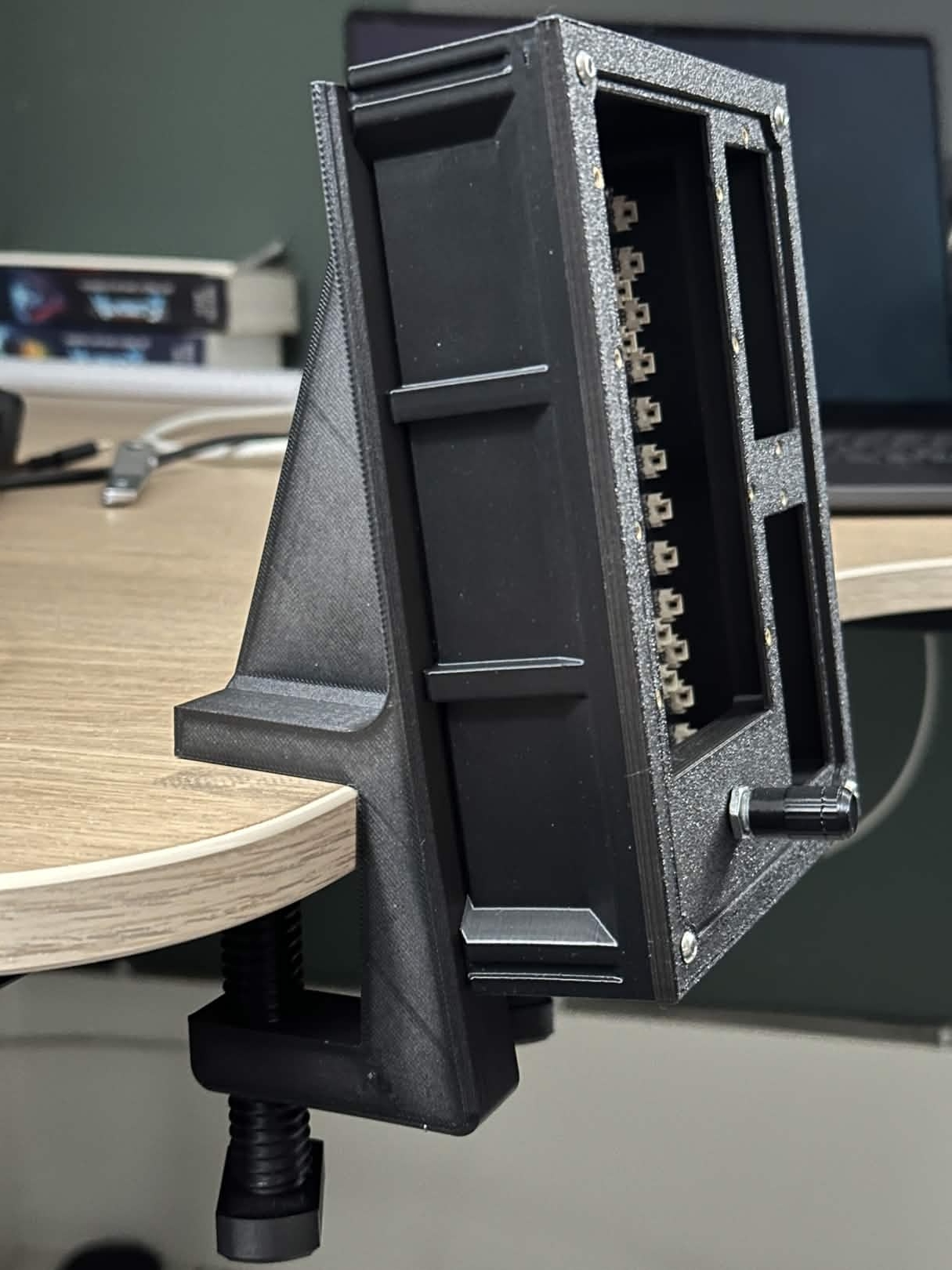
Table Clamp
Clamps to the edge of your desk. Works with tables up to 44 mm thick and needs a flat, unobstructed section at least 30 mm deep (40 mm ideal). Orientation matches your configurator choice.
Mounting Plates
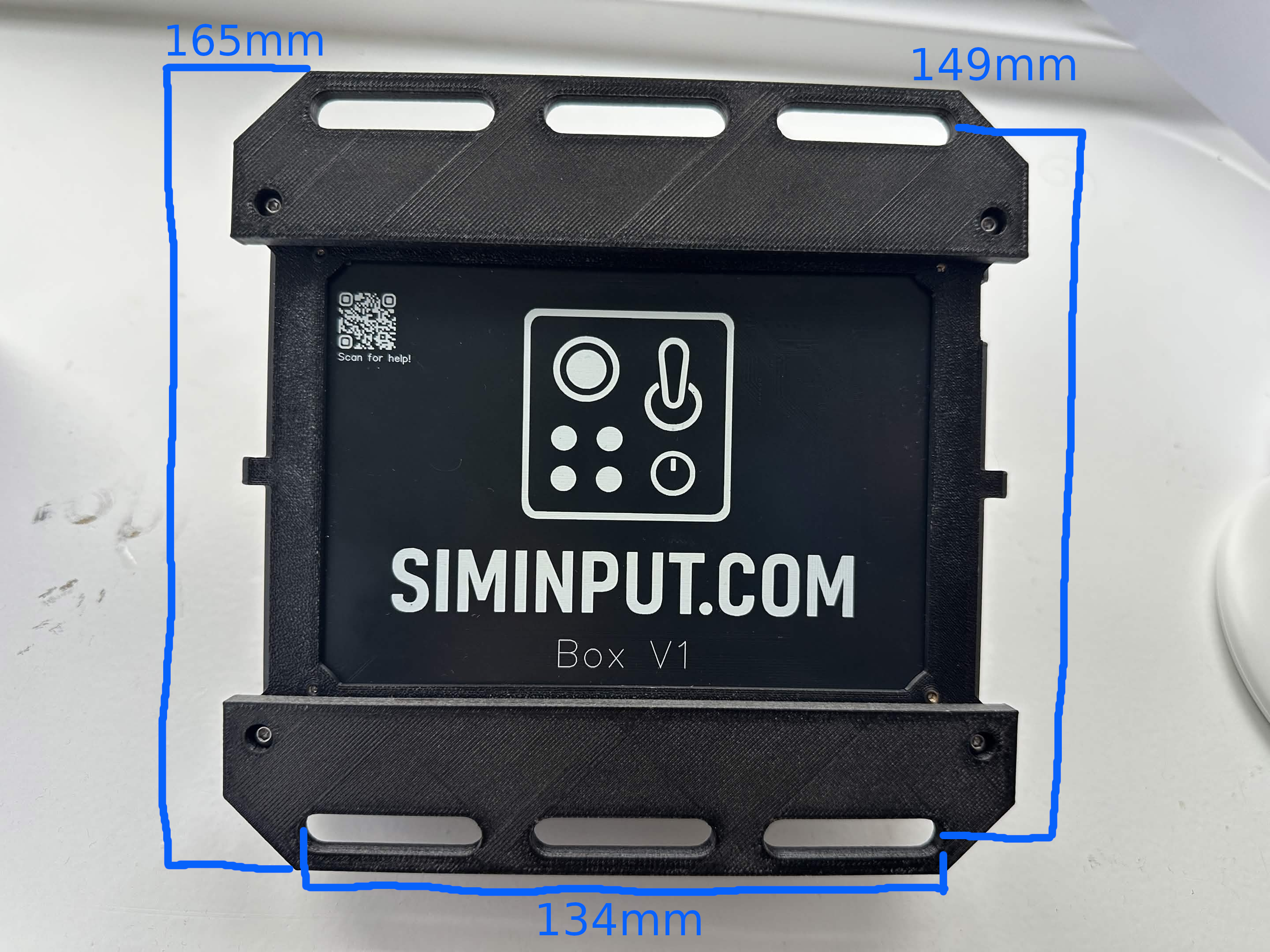
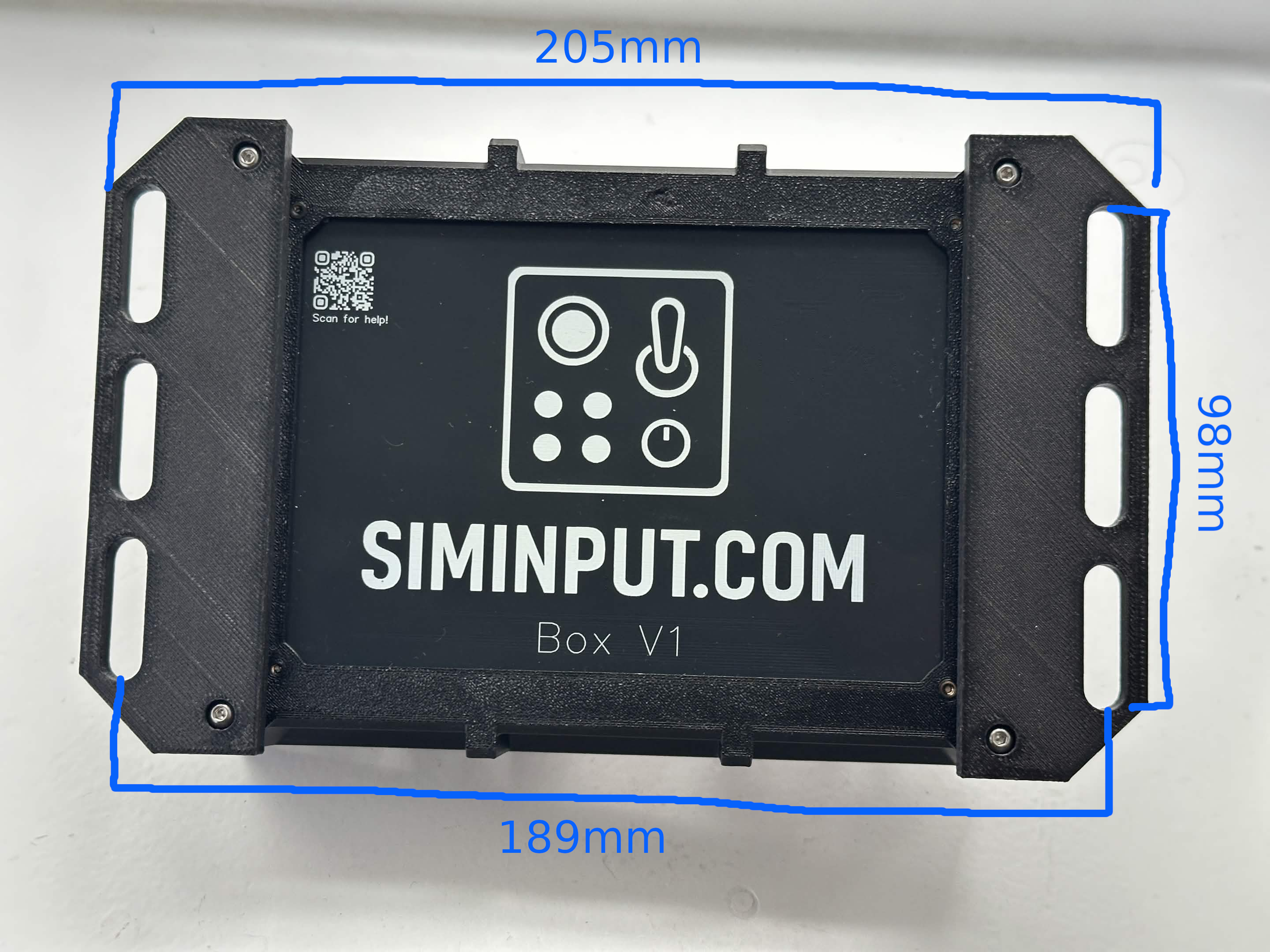
Bolt to the back of the box and attach to any flat surface or rig. Each plate has an elongated slot. The slot range is how far your screw centre can travel with an 8 mm screw filling the full slot width. Smaller screws with appropriately sized washers give you even more range. The second measurement is the distance between the two opposing plates, so it is the span your rig has to cover. Two sizes: large plates run along the long sides of the box, small along the short sides.
Custom mounting
Both accessories bolt to the four M3-threaded inserts on the back of the box, with 150 × 110 mm spacing, 8 mm deep. You can use these directly for any custom bracket or arm. The box can also be front-mounted with four M3 threaded inserts on the top face with the same 150 × 110 mm spacing.
Every module type in detail
Six module types. Each one is 3×6 cm and designed to snap cleanly into any compatible slot.
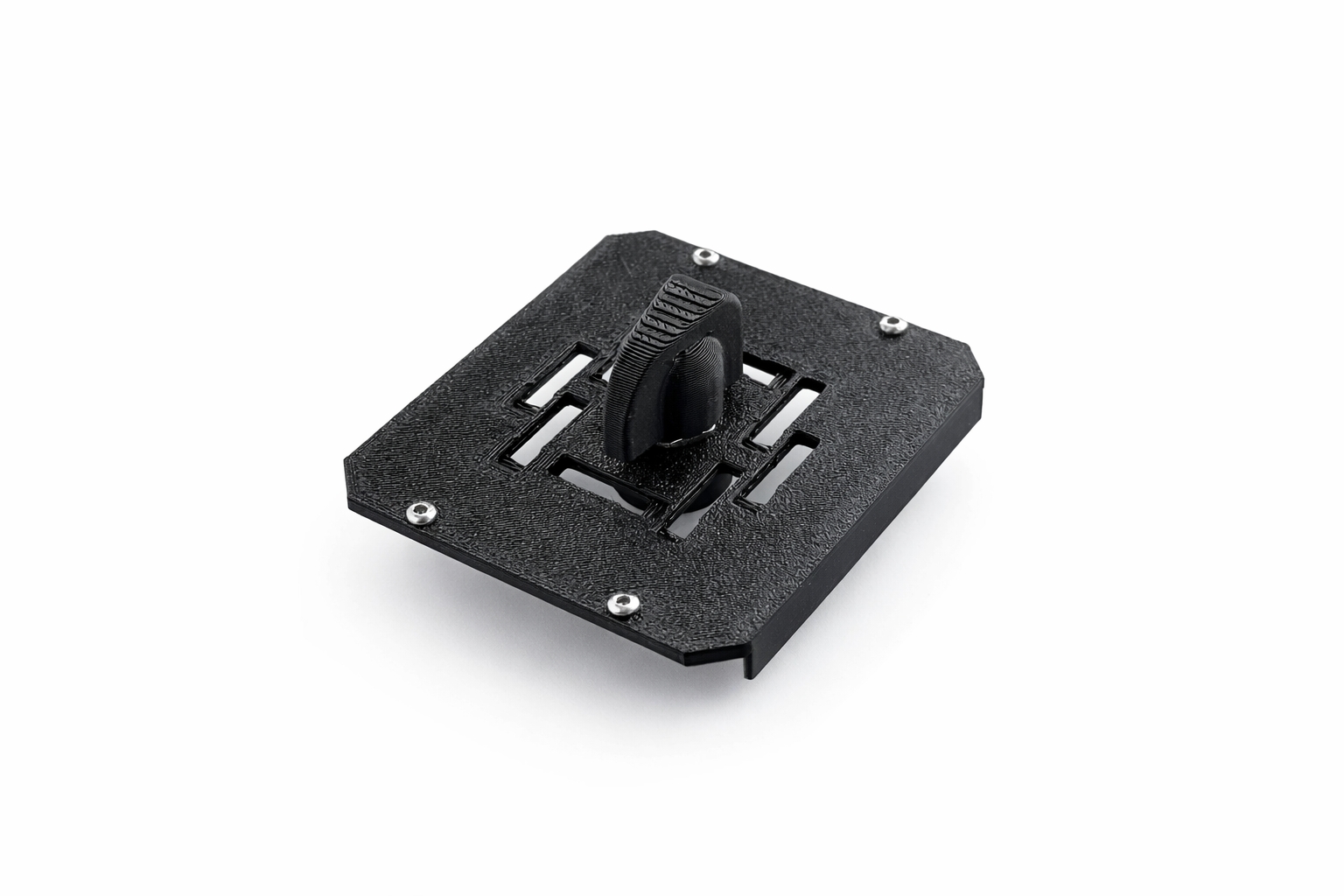
Rotary Switch
€5 / €6 assembledkit €3A multi-position rotary switch that clicks between discrete positions. The single-slot version has 5 positions and fits in one slot. The two-slot version has 8 positions and spans two adjacent slots.
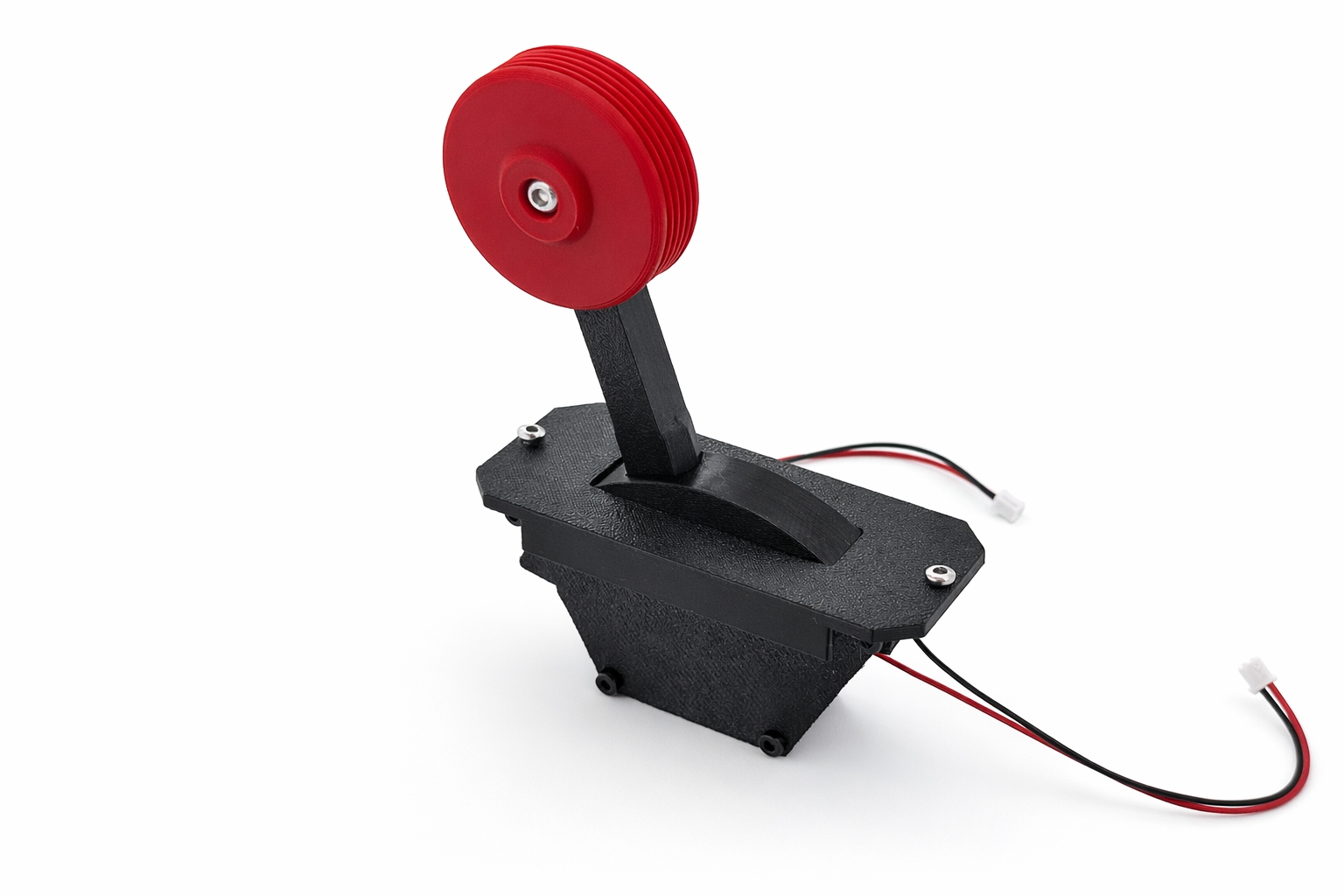
Gear / Hook Lever
€6 assembledkit €3A physical lever with a gear or hook shaped knob. The top position locks with a detent requiring a pull to release. The lever detects when it is between positions. Vertical slots only.
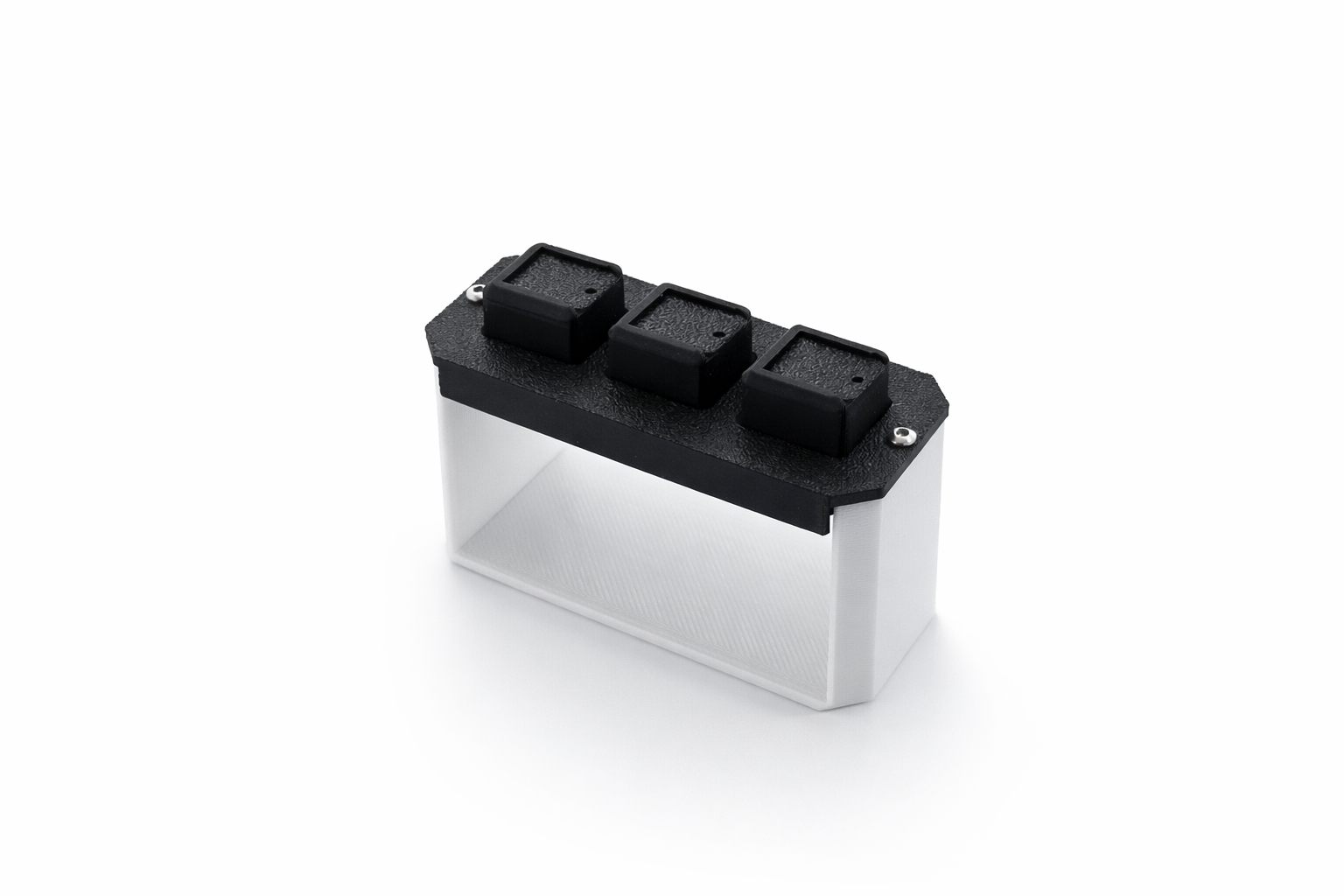
Key Module
€4 assembledkit €2Three mechanical square keys side by side. Momentary action, so you press and release. Smooth travel with a clear stop at the bottom.
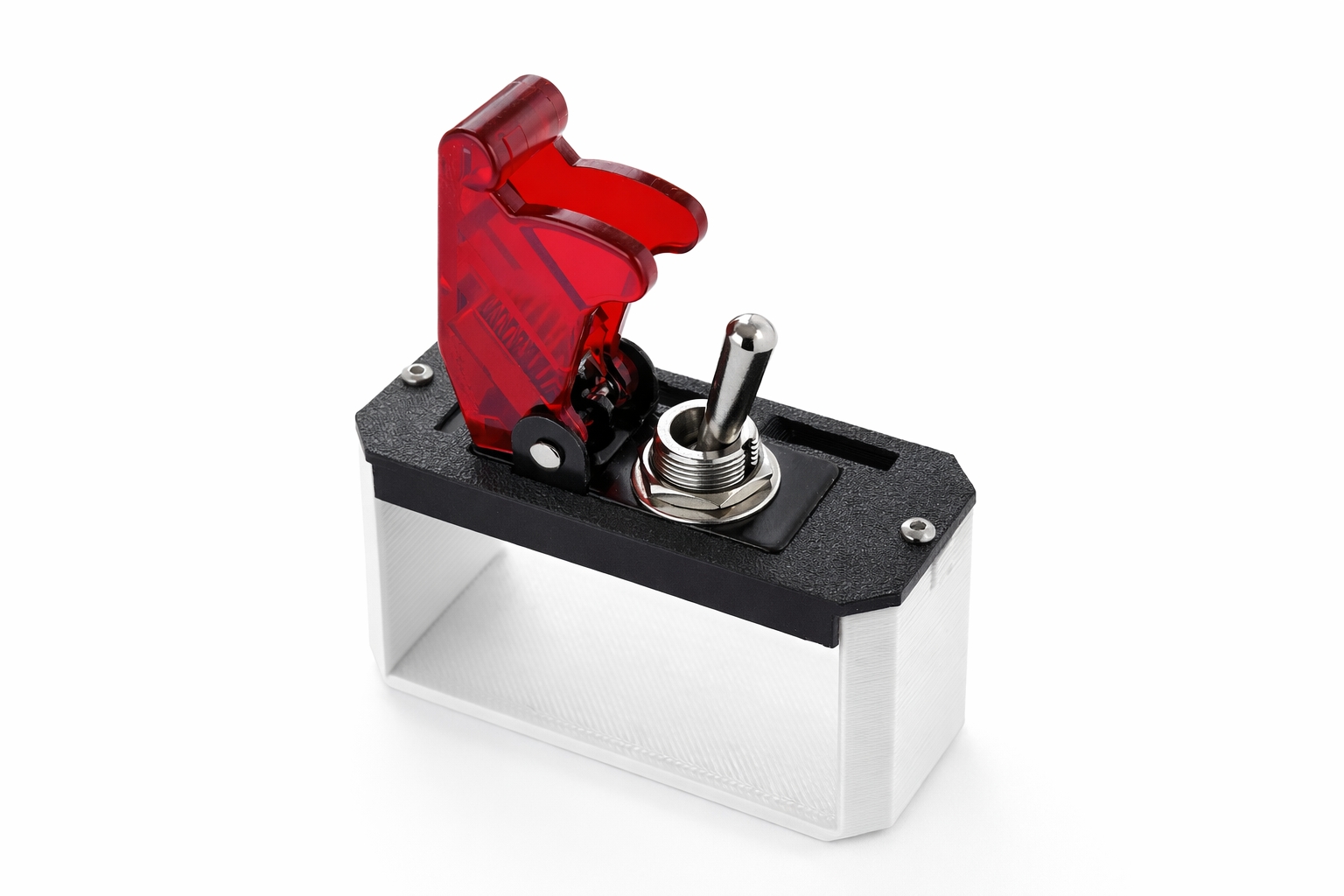
Guarded Switch
€6 assembledkit €4A toggle switch under a red hinged flip cover. You have to lift the cover before flipping the switch, so accidental activation is impossible. Vertical slots only.
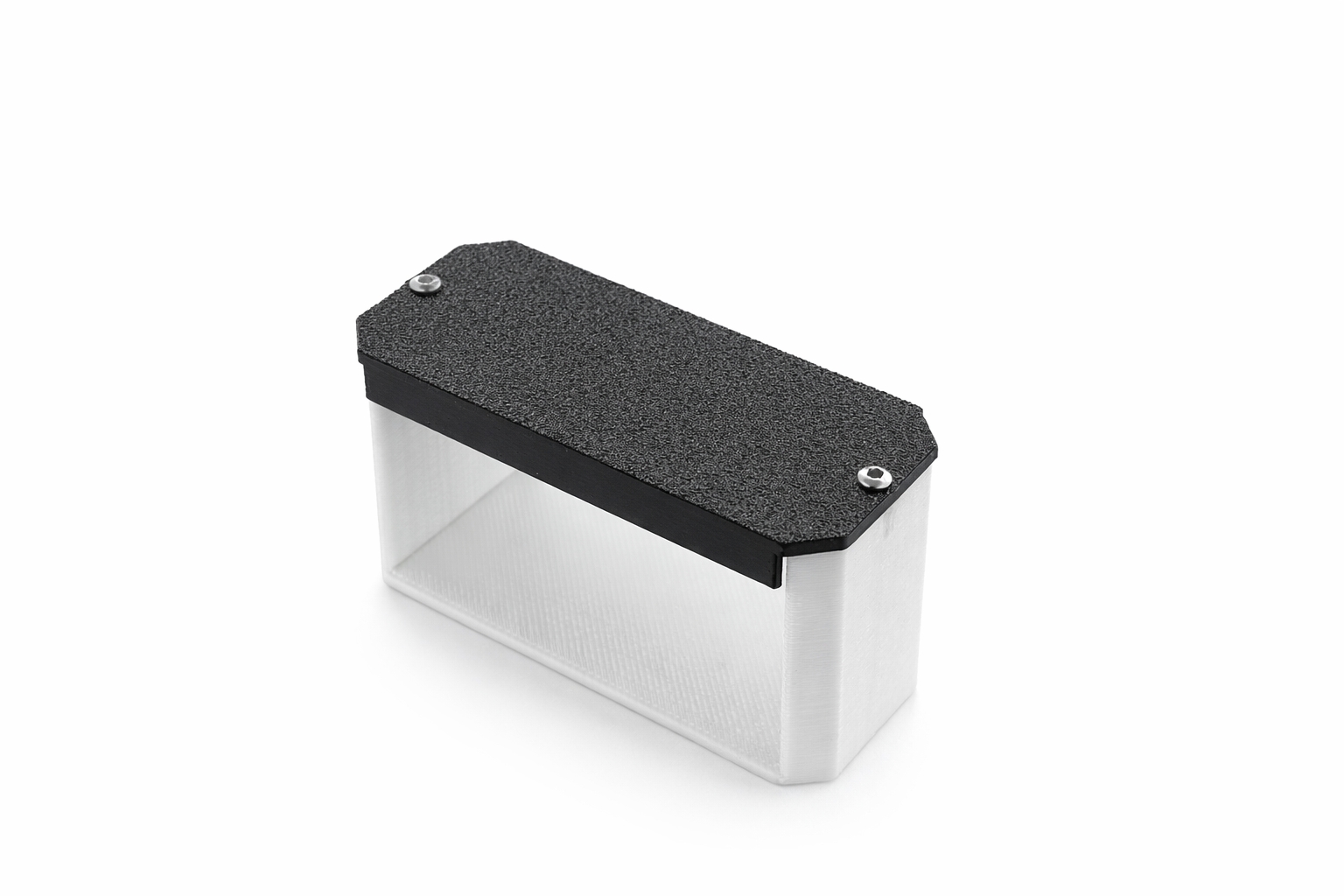
Cover Module
€1A flat 3D-printed cover for any slot you don't want to fill with a control.
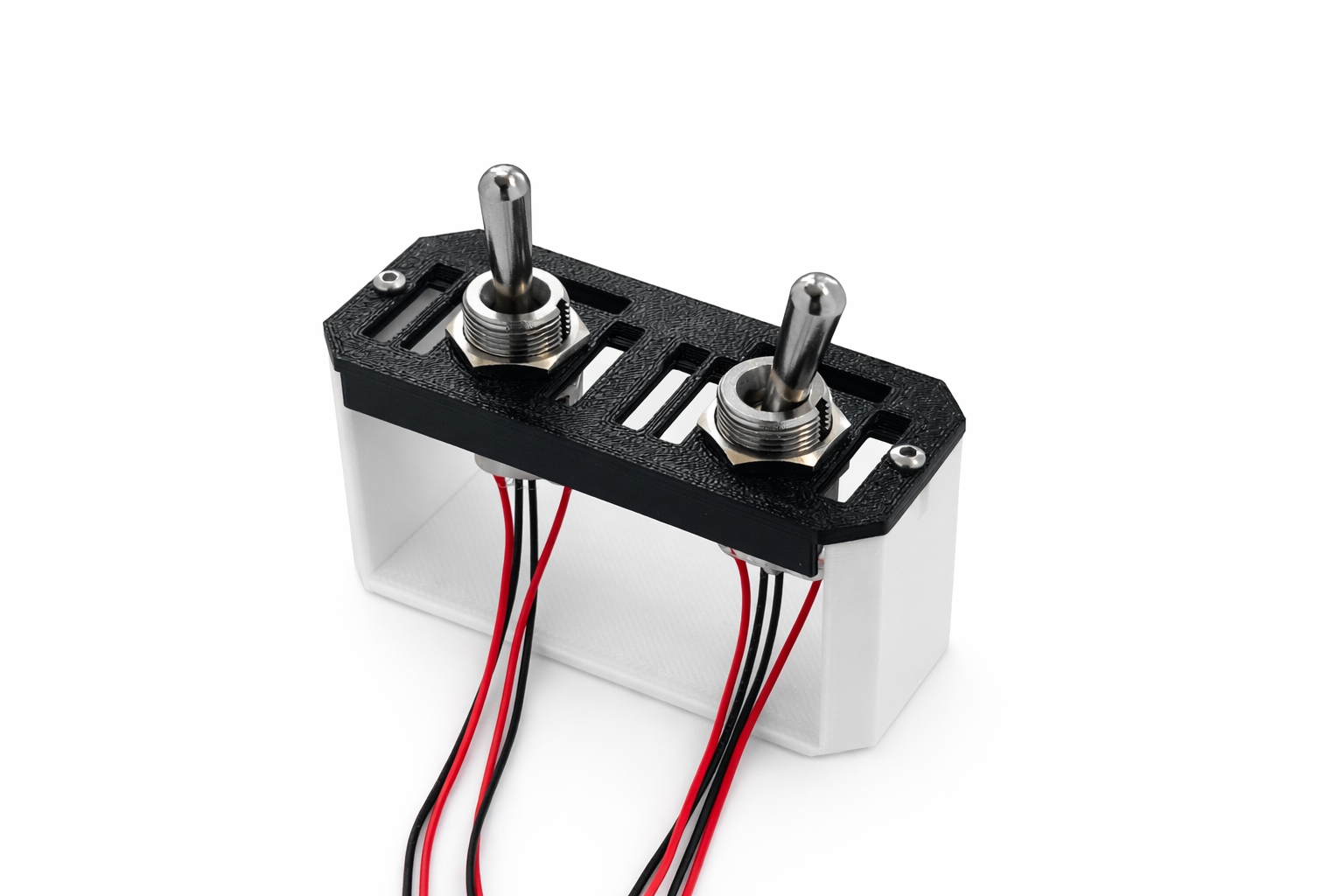
Dual-Position Module
€6 assembledkit €4Two completely independent positions per module, each configurable as a different control type. Each position can be a switch, a rotary encoder, or a tactile button. The encoder is available with either a large or small knob.
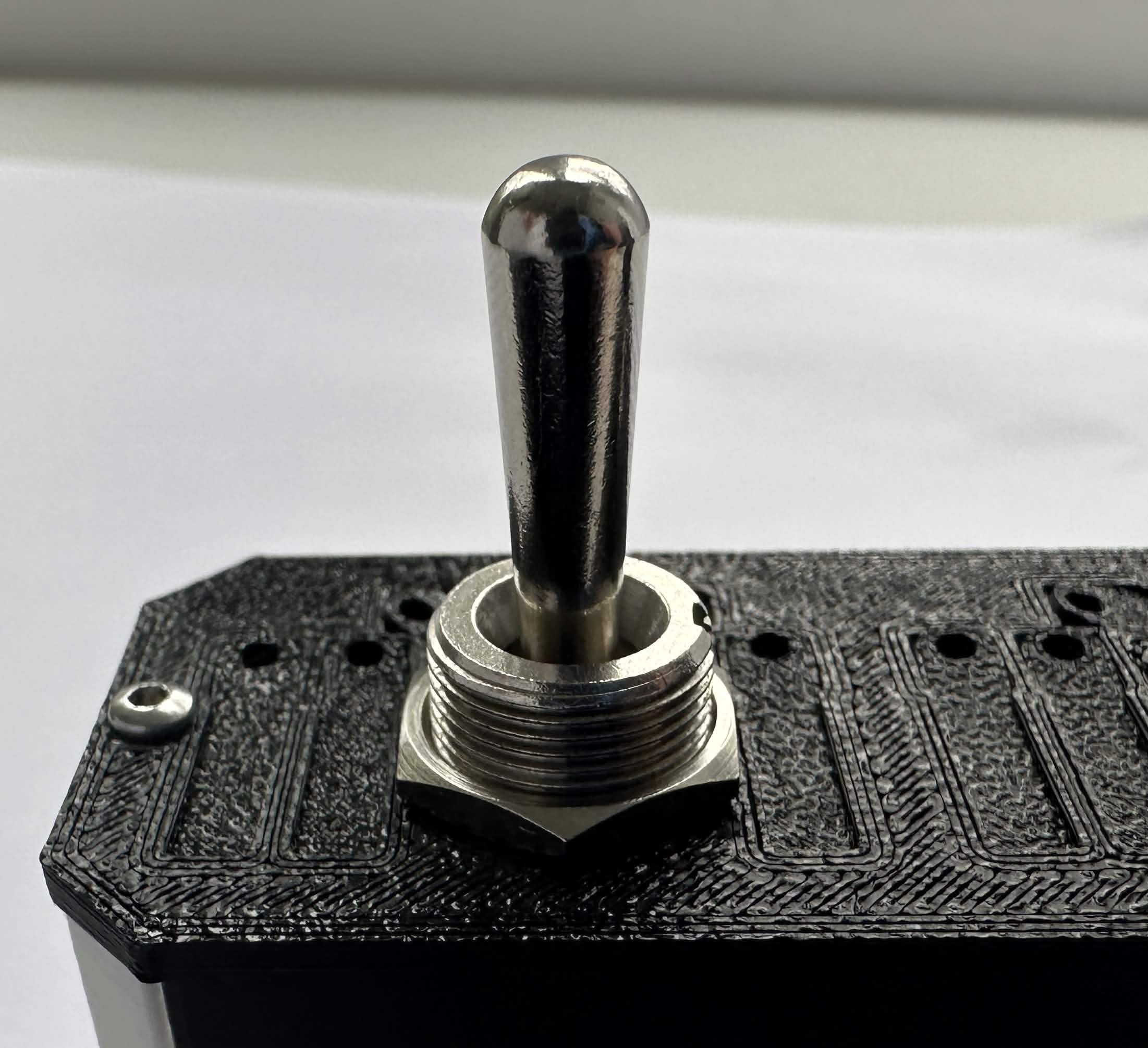
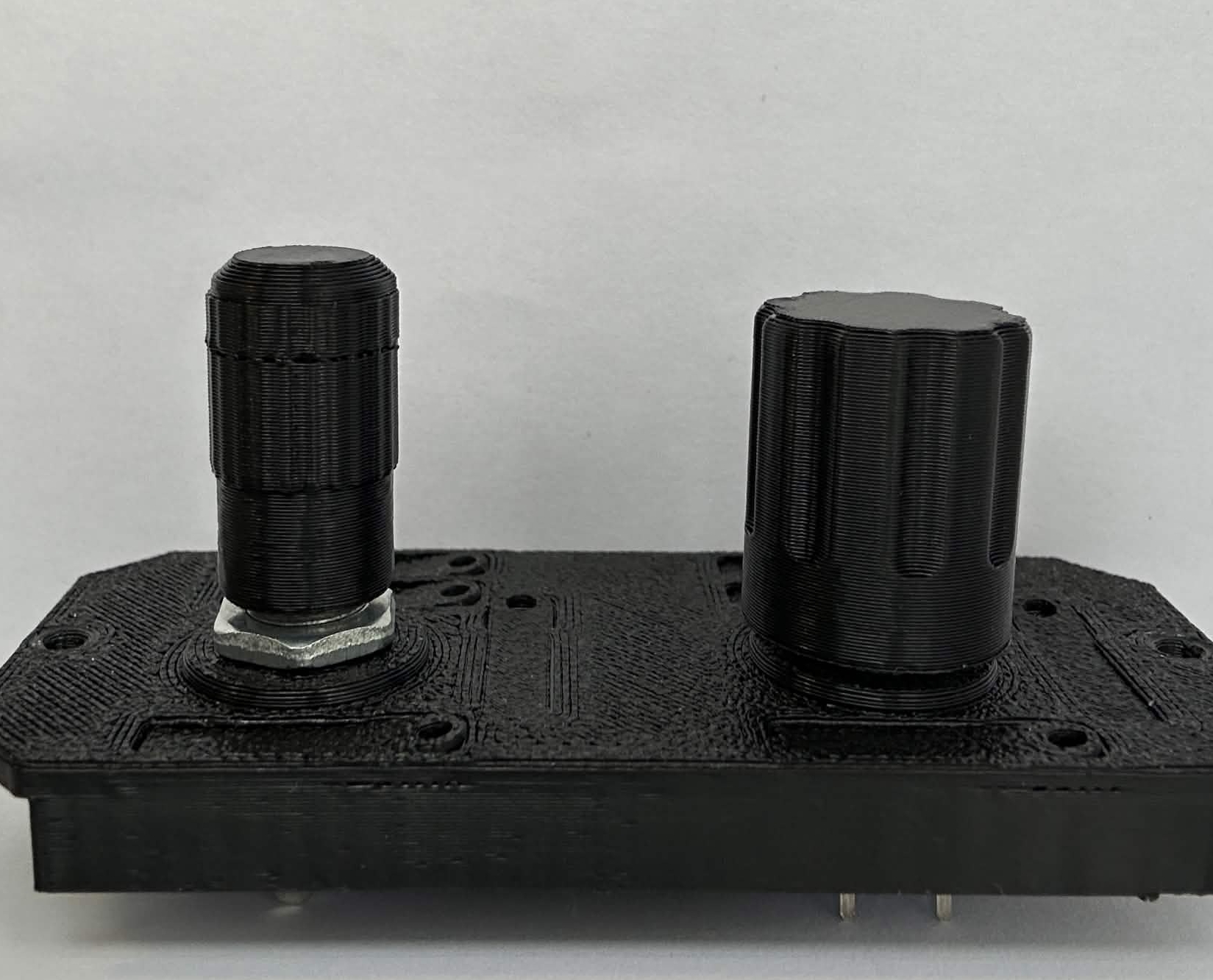
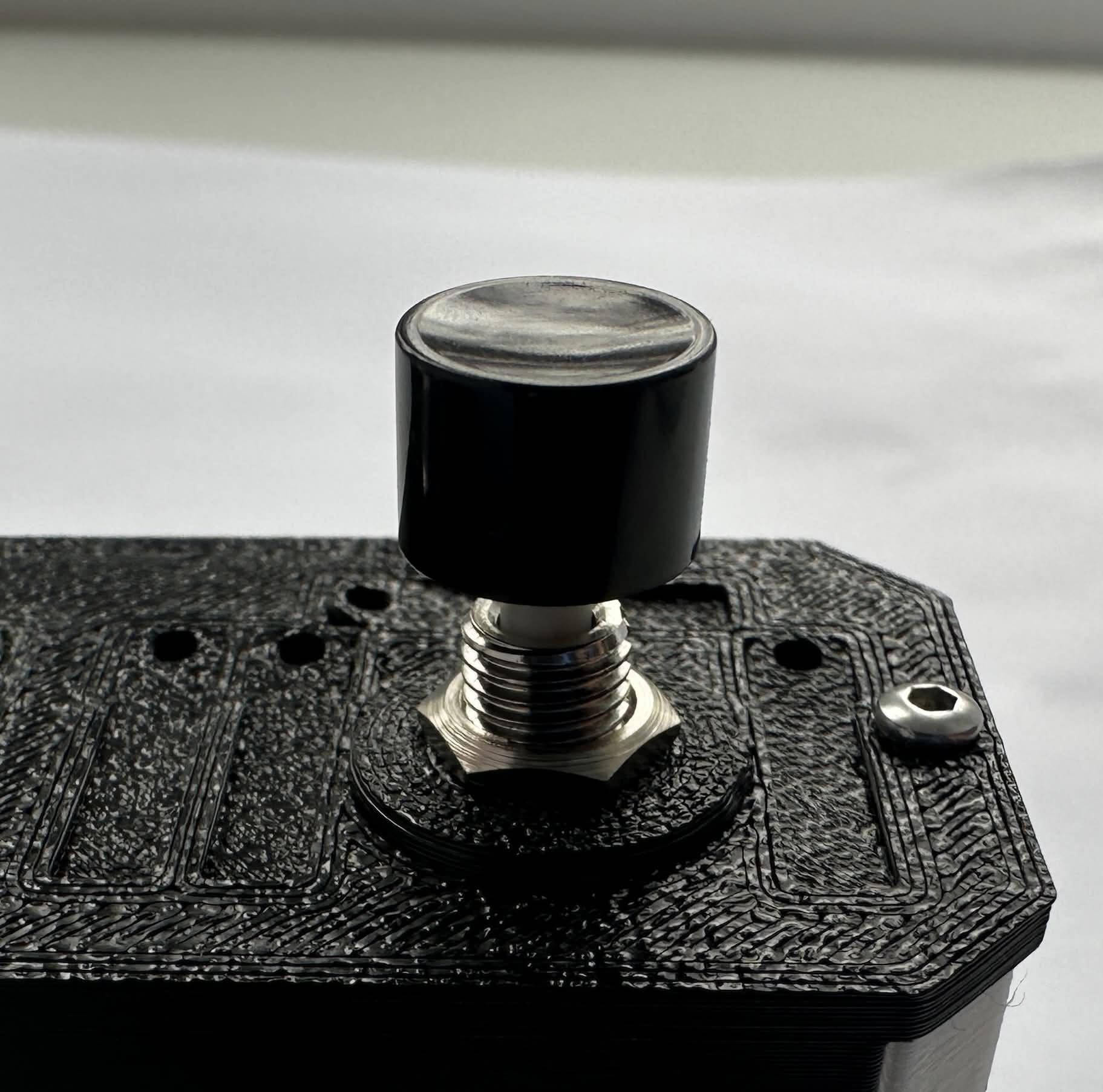
To see what these modules cost together, place them in the configurator; the total updates as you build.
Want to go deeper than specs? The documentation explains how the PCB, firmware, and modules work, and walks through the whole kit build step by step, so you can see exactly what you would be doing and how difficult it is.